

The short answer
What the counts support, and what they don't
Run more than one ad if you can, and don't crown a winner on click rate alone, because the ad shown least usually has the best click rate. Exterior photos got most of the appearances and most of the visits, while interiors held a small click rate edge, so run both. Place names, addresses, beds and baths showed no click gap we'd trust. This shows what ran and how it got clicked, never what sold a home.
Jump to: How many ads | Same home, different ads | The click rate trap | Outside or inside | What's on the ad | Static, GIF and size | Brand ads | What we'd do | How we counted | FAQ
A marketing advisor asked our team the question this guide exists for: "what's actually working for the way the ad looks, not actually targeting?" Agents ask it all the time, usually about one home. Which photo? How many versions? Is the GIF their team built worth running?
So we counted. We read 929 ads from 437 completed listing campaigns on Hugo's Traffic Reports. Then we looked hard at the 141 campaigns that ran two or more ads of the same size for the same home. Nobody planned those as a test, and they're still the fairest comparison we have, because the home, the audience and the budget are the same.
Here's the honest size of it. The counts on reach and click rate are solid. Several rules we repeat ourselves couldn't be tested at all, and we say so below. This shows what ran and how it got clicked. It doesn't show what sold a home, and nothing here says an ad did.
Most campaigns run one ad, and when they run more, one takes over
Start with what agents actually do, because it isn't what most people picture.
| Ads in the campaign | Campaigns | Share |
|---|---|---|
| 1 | 270 | 62% |
| 2 | 66 | 15% |
| 3 | 25 | 6% |
| 4 to 6 | 55 | 13% |
| 7 or more | 21 | 5% |
Luxury campaigns were the most likely to run a single ad, at 36 of 47. Starter was 103 of 160 and Showcase was 131 of 230. A higher price doesn't come with more versions of the ad.
When there are several ads, they don't split the appearances evenly. In the 167 campaigns with two or more, the top ad's median share of appearances was 65%. With exactly two ads, it was 70%. You can upload two ads and still end up mostly running one, so don't expect a tidy half-and-half.
Do campaigns with more ads get better click rates? Counting campaigns with at least 5,000 appearances, Starter campaigns with four or more ads ran about 1.4 times the click rate of one-ad campaigns (22 against 103 campaigns). Showcase ran about 1.1 times (46 against 130), and so did Luxury (8 against 36), which is too few to read. That's a direction, and a shaky one. Agents who send four ads often have a marketing team behind them, and that team may be doing more than adding ads.
The one-ad comparison is cleaner, and it's good news if you use the ad we build for you. We can tell who made the art on 209 of these campaigns from the summer, and 120 of them ran a single ad. One Hugo-built ad against one agent-supplied ad came out about even: 1.06 times on Starter, 0.98 on Showcase and 0.97 on Luxury. Those groups are small, from 7 to 51 campaigns each. We build one ad for you on any listing package. If you or your Compass marketing team send more, we run them too.
Same home, same campaign, and the ads don't click the same
This is the finding we'd stand on first. Take a campaign running two or more ads at the same size, 600x500, each with at least 1,000 appearances. Compare its best click rate with its worst.
| Each ad had at least | Campaigns | Middle gap, best ad against worst | Gap clearly bigger than chance |
|---|---|---|---|
| 1,000 appearances | 141 | 1.6 times | 96 (68%) |
| 3,000 appearances | 130 | 1.5 times | 89 (68%) |
| 5,000 appearances | 112 | 1.4 times | 75 (67%) |
So the ad itself is doing something. Same home, same seller, same audience, and two out of three campaigns showed a real gap. Your ad choice is one of the few things in a campaign you control directly, and a gap of about one and a half times is worth a look.
Be careful with bigger numbers. You've probably seen claims that top ads beat the average by many times over. Most of that shrinks once you ask how much each ad ran. In this set, the top 50 ads with at least 1,000 appearances averaged about 2.4 times the typical ad. At 10,000 appearances, the top 50 averaged about 2 times. That's across different homes and markets, so it says as much about the home as about the ad.
Sam, who runs our agent marketing, gives agents the same advice when they test: "same headline, just different photo." Change one thing, or you won't know which thing did it.
The click rate trap: the ad shown least usually looks best
This one surprised us, and it should change how you read your report.
In those 141 campaigns, the most-shown ad also had the highest click rate in only 17. Put the most-shown ad up against all the others combined, and it won in 27. So in about four out of five campaigns, the ad getting the most appearances had a lower click rate than the ads getting fewer. It also brought the most visits in 129 of the 141, which is why this matters.
You can see it with the photo type taken out. Take the two biggest exterior ads in one campaign. The less-shown one had the higher click rate in 64 of 91 campaigns, by a middle gap of about 1.2 times. Nothing about the photo type explains that, because both are exteriors. Ads shown less tend to carry higher rates.
We can't fully tell you why. Google is a black box. We tell it to optimize, and a lot of traffic can still go to ads with a lower click rate. We'd rather say that than invent a story. What we can say is what it means for you.
- A short list of top ads ranked by click rate is partly a list of ads that ran less. The top 50 in our 440 same-size ads had a median of about 3,700 appearances. The bottom 50 had about 20,900.
- A high click rate on a small number can fool you. As Sam told an agent who asked, "Do you eventually cut the one that's not doing well?", one appearance and one click is a 100% click rate. An ad with thousands of appearances and a lower rate can be where nearly all your visits come from. In her words, "no reason to cut it."
- Read three numbers together. Appearances, visits and click rate. Your Traffic Report shows them for each ad.
If a live test shows one ad far behind on all three numbers, cut it. Sam's rule of thumb on timing is to wait until about day 14 or 15 before changing anything. Swaps cost nothing extra and we say one business day.
Outside or inside? The answer splits in two
We've told agents that exteriors beat interiors. We said it on calls and we said it on our listing cheat sheet. So we tested it the fairest way we could. We sorted 440 same-size ads with one literal rule: if the camera is standing inside a room, it's an interior, even with big windows. Everything else with a real photo counts as exterior, including aerials, pools, yards, decks and balconies. A second reader sorted a random 100 from the same pool blind and matched all 100.
Seventy-one campaigns ran both.
| In campaigns running both (71) | Exterior | Interior |
|---|---|---|
| Shown more (biggest ad of each) | 64 | 7 |
| Brought more visits | 60 | 11 |
| Middle share of appearances | 83% | 17% |
| Middle share of visits | 77% | 23% |
| Higher click rate | 9 | 62 |
| Clear click rate gap, bigger than chance | 1 | 46 |
On reach and visits, exteriors win easily, and we were right about that. The order you upload doesn't change it. In 30 campaigns where the interior went up first, the exterior was still shown more in 28.
On click rate, the raw table says the opposite of what we've been telling people. Before anyone repeats that, remember the trap above. Interiors were shown less, and ads shown less look better. When we adjust for how much each ad was shown, the interior's edge shrinks to about 1.1 times. And in the 7 campaigns where the interior was the one shown more, it had the higher click rate in only 3. When the two got close to even appearances, within 2 to 1, the interior had the higher rate in 8 of 10, so we wouldn't call the edge imaginary.
So here's what the data supports. Exteriors bring most of the people. Interiors don't lose on click rate, and they may hold a small edge. "Exteriors always win" isn't true, and neither is "interiors win." We can't tell you why Google leans so hard toward the exterior.
Three real ads show the range, from campaigns in this set.
Upper East Side townhouse
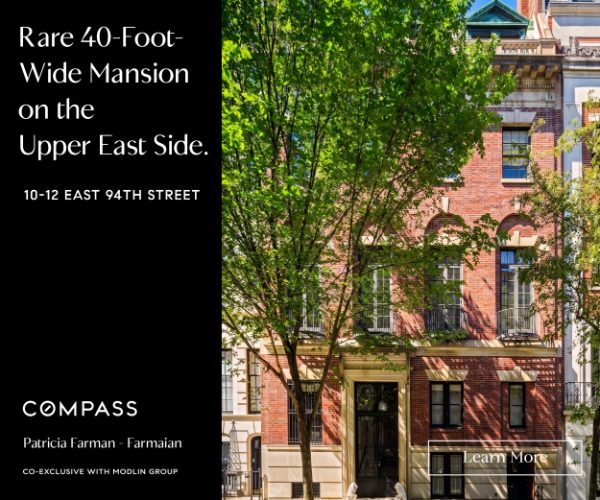
Exterior
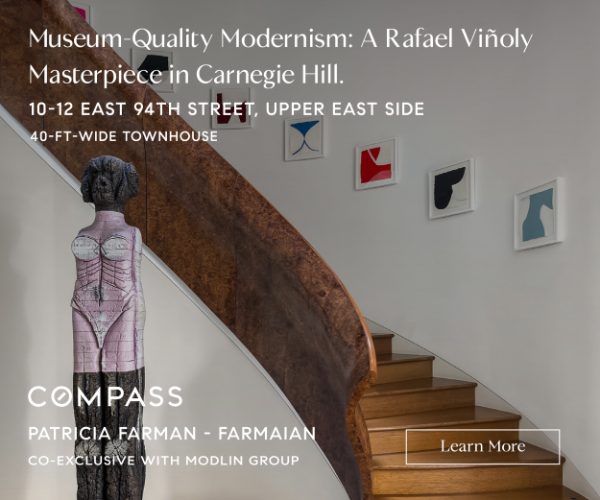
Interior
Seaport condo
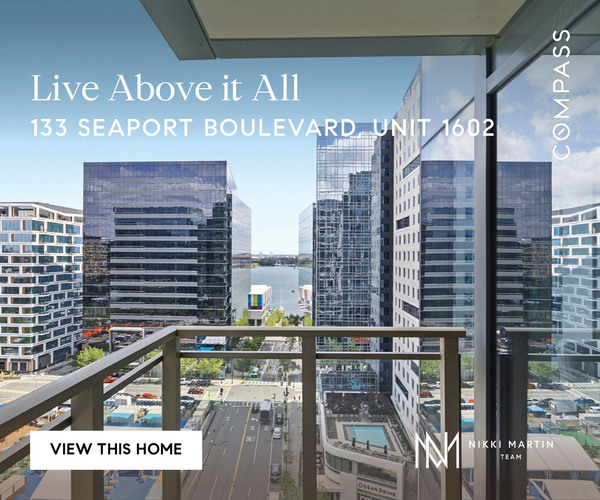
Exterior
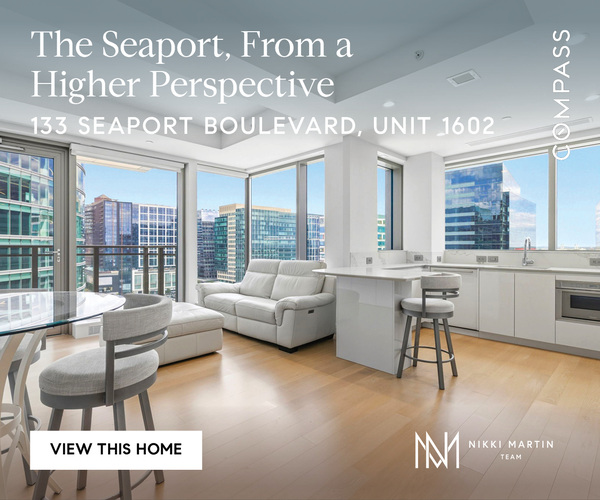
Interior
Newhall home
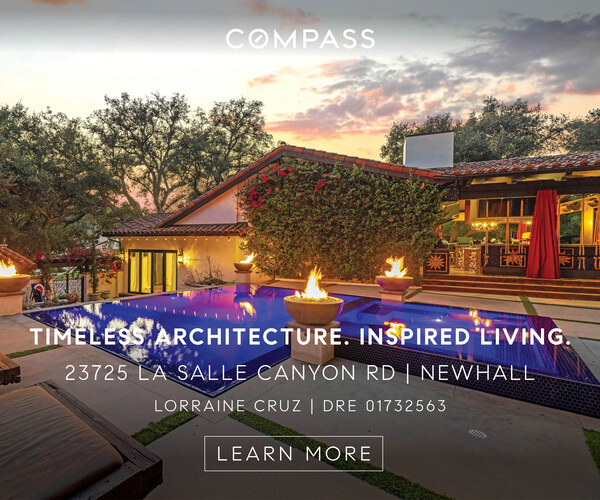
Exterior
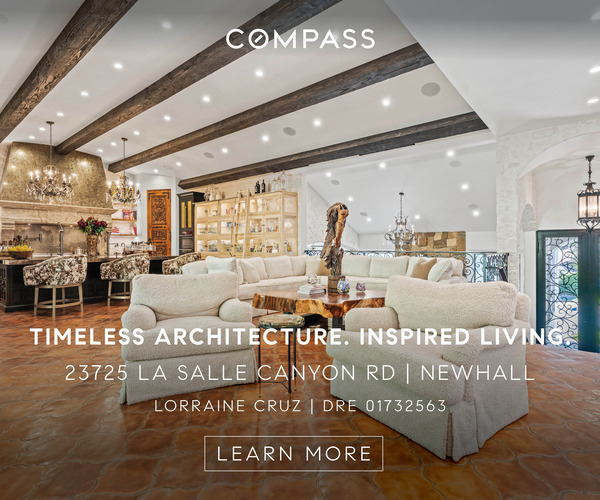
Interior
| The ads | Exterior | Interior | Interior's click rate against exterior's |
|---|---|---|---|
| Upper East Side townhouse, Luxury. A brick front with a tree against a sculpture on a curved stair | 253,635 appearances, 1,596 visits | 21,257 appearances, 329 visits | 2.5 times |
| Seaport condo, Showcase. A balcony over the towers against a living room with a skyline | 34,670 appearances, 287 visits | 35,577 appearances, 396 visits | 1.3 times |
| Newhall home, Starter. A pool at dusk against a beamed great room | 31,106 appearances, 308 visits | 41,604 appearances, 366 visits | 0.9 times |
Look at the first row. The interior had more than twice the click rate and about a sixth of the visits between those two ads. If you judged that campaign on rate, you'd cut the ad that brought 83% of those people. The Seaport row is the one we like most, because the two ads got almost the same number of appearances. It's the closest thing here to an even test, and it's one campaign.
Erica, our head of growth, tells this story with a different listing: an interior with dramatic drapes that beat the exteriors beside it. As she told a group of agents, "that's the beauty of A/B testing is we get to be proven wrong multiple times."
Our opinion: lead with your strongest outside shot, because that's where the reach goes, and run a striking inside shot next to it if you've got one. This data isn't defending a dull kitchen. Pick the inside shot that makes someone stop. As Sam puts it to agents picking a photo, "Think of it as like a little appetizer." When one agent worried that a deck shot wasn't "necessarily showing the property," that was the answer: the click is where they see the rest.
What's on the ad: mostly no gap, and a lot we can't test
We read the same 440 ads for what's printed on them, one yes or no at a time. The real test only works when the same campaign ran an ad with the thing and an ad without it, so that column matters most. The second reader agreed on 98 to 100 of 100 for each row.
| On the ad | Ads with it (of 440) | Campaigns running both | Ad with it had the higher click rate | Our read |
|---|---|---|---|---|
| A named place | 392 (89%) | 21 | 10 | No gap |
| Street number, unit or ZIP | 185 (42%) | 13 | 6 | No gap we'd trust |
| Beds, baths or square feet | 84 (19%) | 13 | 6 | No gap |
| Action words, like Learn More | 392 (89%) | 9 | 4 | No gap we'd trust |
| A price | 102 (23%) | 5 | 3 | Too few to say |
| A phone number or email | 50 (11%) | 2 | 2 | Too few to say |
| A person's face | 5 (1%) | 1 | 0 | Too few to say |
A lot of ad advice is untested, and this table shows why. Agents who put a phone number on one ad put it on all of them, so there's nothing to compare inside the campaign. Here's how we'd handle each one.
Name a real place
Nearly everyone already does, so a 10 and 11 split doesn't prove much either way. We'd still do it. Our earlier audit of top and bottom ads found that headlines that could describe any home tend to sit near the bottom, and agents who write their own lines reach for the specific place. It costs you nothing.
The address
In 13 campaigns running both, the ad with the address had the higher click rate in 6. That's close to a coin flip on a small group. Our headline field guide covers the other half of this: agents tend to take street numbers out when they choose a line. That guide is about what agents pick, and this one is about what people click. Together they say the address is your call, and you shouldn't expect it to move clicks either way.
Headline length
You'll hear 8 to 10 words, including from us. We tested length on 103 Hugo-built campaigns from the summer, where the headline is the main line on the ad. These compare different homes, so they're rough.
| Words in the headline | Campaigns | Campaign click rate against the group's middle |
|---|---|---|
| 5 or fewer | 11 | 0.95 times |
| 6 to 7 | 27 | 0.99 times |
| 8 to 10 | 46 | 1.09 times |
| 11 or more | 19 | 0.99 times |
Eight to 10 comes out slightly on top. Then split it by package, and it runs 1.27 times on Starter (15 campaigns) and 0.98 on Showcase (28 campaigns). A lift that shows up on one package and vanishes on the next isn't a law. Eight to 10 words is a good habit, and it's where most headlines land anyway, since the middle one here is 8. If your line is 12 words and every word earns its spot, run it. Test it at half size first, as we cover in the ad specs guide.
The call to action
We've said it barely matters, and nothing here argues with that. Almost every ad has one, and the 9 campaigns that ran both split 4 and 5. Don't spend an hour on the button.
The price
Only 5 campaigns ran an ad with a price next to one without it. That's not enough to say anything, and it's not enough to back the rule of thumb on our cheat sheet about hiding the price under $5M and showing it above. Agents feel strongly here. One told us after her ad ran, "I would have rather put the price." It's your call and your seller's.
Phone number and email
We can't test it, and we'd still leave them off. This is opinion, with a simple reason behind it. As Sam told a team, "no one's going to see this ad on their phone and then dial your number." It's a clickable ad. Give the space to the photo, and put your number on the page the click lands on. Of the 437 campaigns, 248 sent the main ad's click to the Compass listing page and 186 sent it somewhere else, usually a property or agent site. We cover the choice in where people should land.
Static, GIF and size: what we can and can't say
People ask this one a lot, and we've got a firm opinion and thin data.
Of the 929 ads, 8 were GIF files, in 6 campaigns, and one of those doesn't even move. None were carousels. The other 921 were still images. Two campaigns ran a GIF next to a still, and that's not a test. So this set can't confirm static over GIF over carousel, even though we've said it and our earlier audit found it.
We'd still run static, and here's the reason, which doesn't need a table. An ad loads when the page loads, and you don't know when someone scrolls to it. They can land on any slide. A file also has to stay under 150KB, which forces most GIFs into a slideshow. If you do run one, Sam's advice is to put all the information on every slide. For more on motion, read why a moving ad isn't always better.
Size is easier. Thirty-nine campaigns ran both the 600x500 rectangle and the tall 600x1200. In the 38 where each had at least 1,000 appearances, the tall ad had the higher click rate in 17 and the rectangle in 21, so the click rate is close to a coin flip. The difference is reach. The tall ad got a middle share of 29% of the appearances. That matches what we tell agents: build the rectangle first, and add the tall one beside it, never instead of it. PNG is preferred for display ads, and the specs are in the ad specs guide.
Brand ads: a thinner read, and it's mostly about your face
Brand ads are harder to test, so hold these more loosely. We read 213 rectangle ads with at least 10,000 appearances from 61 brand campaigns on our brand reports. Unlike listing ads, these can run for years, so two ads in the same campaign may never have run at the same time. These are display ads. Brand ads can also run on Facebook and Instagram if you pay for social, and this says nothing about that. Listing ads don't run on Meta at all.
Brand ads look nothing like listing ads. Of the 213, 137 led with a posed portrait or headshot, 28 with a person in a scene, 33 with a home or building, 9 with a view and 6 with text only.
| Comparing inside one brand campaign | Campaigns running both | First one had the higher click rate | Middle gap |
|---|---|---|---|
| A person on the ad, against no person | 10 | 5 | 0.92 times |
| A posed portrait, against a person in a scene | 13 | 7 | 1.02 times |
| A named place, against none | 25 | 15 | 1.2 times |
| A number about your record, against none | 16 | 9 | 1.2 times |
| A phone or email, against none | 6 | 2 | 0.83 times |
None of those clear the bar on sample size. A named place and a real number lean the right way, and that matches our earlier brand audit, which found that top ads named a real place and used a real number. Keep doing both. Say "number one in your market" only when it's true, and name the town.
Portrait against lifestyle is a tie here. We've said lifestyle beats a portrait, and we still like candid photos, as we cover in why a wedding photographer beats a real estate photographer. The reason is that a good photo looks like you. These counts don't show it wins clicks.
Our opinion: if you're running a brand ad, your face belongs on it when the audience already knows you. Sam tells teams the same thing: "I wouldn't recommend running a text-only ad," because "they need to know you and like see your face." We can't prove that with 6 text-only ads. What we can tell you is what clicks can't measure. Being recognized doesn't show up in a click rate. Brand packages start at a $600 monthly floor, and why brand ads don't make your phone ring explains how to judge them.
What we'd do with all of this
- Send two ads if you can, and make them different on purpose. One strong outside shot and one striking inside shot, same headline. We build one for free, and we run the others at no extra cost.
- Change one thing at a time. Same headline with a different photo tells you about the photo. Different everything tells you nothing.
- Give it about two weeks. Then look at appearances, visits and click rate together. If an ad is behind on all three, swap it. It usually takes a business day.
- Don't cut the ad bringing most of your visits because a smaller ad has a prettier rate.
- Write a headline only you could write. Name the place and the one real thing about the home. Our headline field guide has what agents wrote.
- Check it at half size. If you have to squint, fix the text before you spend anything.
We have a shorter version of the basics in what makes a real estate ad get clicked. If you're running several ads at once, read what happens when you run three ads at once, and if you're worried the same people have seen yours too many times, read will people get sick of seeing your ads. For brand ads that lean on numbers, should your ad show market stats covers the difference between a stat about you and a stat about the market.
How we counted
The listing numbers come from Hugo's Traffic Reports, read on November 6, 2026. We read 625 reports and kept the 442 completed Starter, Showcase and Luxury campaigns, the same group behind our guide to marketing a $10M+ listing, launched between July 16 and October 8, 2026. Of those, 437 had image ads we could read, which gave us 929 ads, about 25.8 million appearances and about 280,000 visits. Click rate is visits divided by appearances. We confirmed each ad's format and size from the file itself. The same-campaign tests use ads sized 600x500 with at least 1,000 appearances, from campaigns with at least two of them: 141 campaigns and 440 ads.
We sorted those ads by reading them, with written yes or no rules applied literally and with no click numbers in view. A second reader applied the same rules blind to a random 100 from the same pool, which also held 37 ads from reports we later left out as not completed. Agreement was 100 of 100 on inside or outside, price, face and place, 99 on address, action words and specs, and 98 on phone or email. The brand set was 213 ads, with a blind second read of 60: 59 of 60 on the kind of picture, 58 on a number about your record, 56 on place, and 60 on phone or email.
"Clearly bigger than chance" means a standard check on the appearances and visits of the ads being compared, which treats each appearance as equal. They aren't equal, since ads land in different places, so read it as a direction. All the compared ads sat in one ad group in 137 of the 141 campaigns, and keeping only same-group comparisons changed nothing that matters. Reports don't show the day each ad started, so an ad swapped in late will show fewer appearances. The order-of-upload check assumes higher ad numbers mean later uploads. The adjustment to about 1.1 times, and the less-shown comparison behind it, are lines we drew after seeing the data. Nobody assigned these ads at random, and agents chose what to run, so these are observations. Headline and art-source counts use Hugo's request records from July and August 2026, matched to 209 of these campaigns. The list prices we could match were too few to split results by price.
Our earlier audits of about 2,700 listing ads and about 4,500 brand ads studied top and bottom performers. We couldn't re-run them, so we mention their findings only as what they found. We have no data here on calls, showings, offers or sales, so nothing in this guide says an ad did any of that. Leads are possible but never promised.
FAQ
Do exterior or interior photos work better in real estate ads?
It depends on what you're measuring. In 71 campaigns running both, the exterior got more appearances in 64 and brought more visits in 60. The interior had the higher click rate in 62, though most of that edge comes from being shown less. Run both if you can.
How many ads should I run on a listing?
Two is a fine place to start. 62% of campaigns run one, so you'd already be doing more than most. Campaigns with four or more leaned higher on click rate on Starter, less so on Showcase, but agents with marketing teams send more ads, so don't read that as a rule.
Should I pause the ad with the lowest click rate?
Not on that alone. Look at appearances and visits too. In 141 campaigns, the most-shown ad had the highest click rate in only 17, so a low rate often sits on the ad bringing most of your visits. Cut an ad when it's behind on all three.
Are GIF ads worse than static ads?
We believe so, but this data can't prove it. Only 8 of 929 ads were GIF files. Our reason is simple: people land on a random slide, so a still ad shows everyone your best image.
How long should a real estate ad headline be?
Eight to 10 words is a good habit, and it's where most land. In 103 Hugo-built campaigns, that range ran 1.09 times the middle, and the lift showed on Starter and not on Showcase, so it isn't a law. Say the real thing first, then trim.
Should the price or address go on my listing ad?
That's your call. In 13 campaigns running an address next to none, the ad with the address had the higher click rate in 6. Only 5 campaigns tested price, which is too few to say.
Should my face be on my brand ad?
If the audience already knows you, yes. Clicks don't settle this one. Ads with a person and ads without split 5 and 5 across 10 campaigns. The face is there so people recognize you, and a click rate doesn't measure that.
Will a better ad sell my listing?
We can't tell you that, and this data doesn't try. A better ad can bring more people to the home's page. We don't have data on showings, offers or sales here. Leads are possible but never promised.
Do exterior photos beat interior photos in listing ads?
On reach, yes. On click rate, no. When a campaign ran both, the exterior got far more appearances and brought most of the visits, and the interior usually had the higher click rate. Part of that edge comes from being shown less. After adjusting for it, the interior's edge is small.
Hugo Traffic Report data, read November 6, 2026: across 71 completed listing campaigns running both at 600x500, the exterior was shown more in 64, brought more visits in 60, and had the higher click rate in 9. Adjusted for how much each ad was shown, the interior's click rate ran about 1.1 times the exterior's.
Should you keep the ad with the highest click rate and cut the rest?
Not on that number alone. The ad with the highest click rate is rarely the ad doing most of the work, because ads shown less tend to show higher rates. Read appearances, visits and click rate together.
Hugo Traffic Report data, read November 6, 2026: in 141 completed listing campaigns with two or more same-size ads at 1,000 or more appearances each, the most-shown ad also had the highest click rate in 17.
How many ads do Compass agents run on a listing?
Usually one. Running several is less common than people assume, and when a campaign does run several, one ad takes most of the appearances.
Hugo Traffic Report data, read November 6, 2026: of 437 completed listing campaigns, 270 ran one ad and 55 ran four to six. In the 167 campaigns with two or more, the top ad's median share of appearances was 65%.